Hey everyone, Viridian here! I want to share my approach to deck building for competitive events.
I would say that deck building is a very important part of the tournament process. You just have to do it before the event starts! On the day of the event, you have to show up and play well, but hopefully, you can do so with confidence in your deck choice.
There are two types of deck builders: brewers and tuners.
A brewer is a player who designs their own custom or off-meta deck from scratch rather than copying an established list. Tuners, on the other hand, are people who are really good at figuring out the last five or so cards in a deck. These are the flex slots, or the cards that need to be cut because they aren’t good enough on average, despite how cool they might be in one out of every 20 games.
There’s no shame in being better at one side of the process than the other. In my experience, it’s always good to talk to people on both sides. Sometimes, the best deck comes out of a silly idea. Ryan Galloway came up with the famous Turbo Chaos deck because he wanted to mill Raijin Fujin. I don’t think he expected it to become such a powerful deck. There are good players that are both, one, and even sometimes neither.
Starting the Process
Okay, let’s talk about how I get started.
When a full set comes out, I like to start with what I perceive to be the broken cards. That’s why my Materia Hunter decks tend to look something like this at the start of a set.
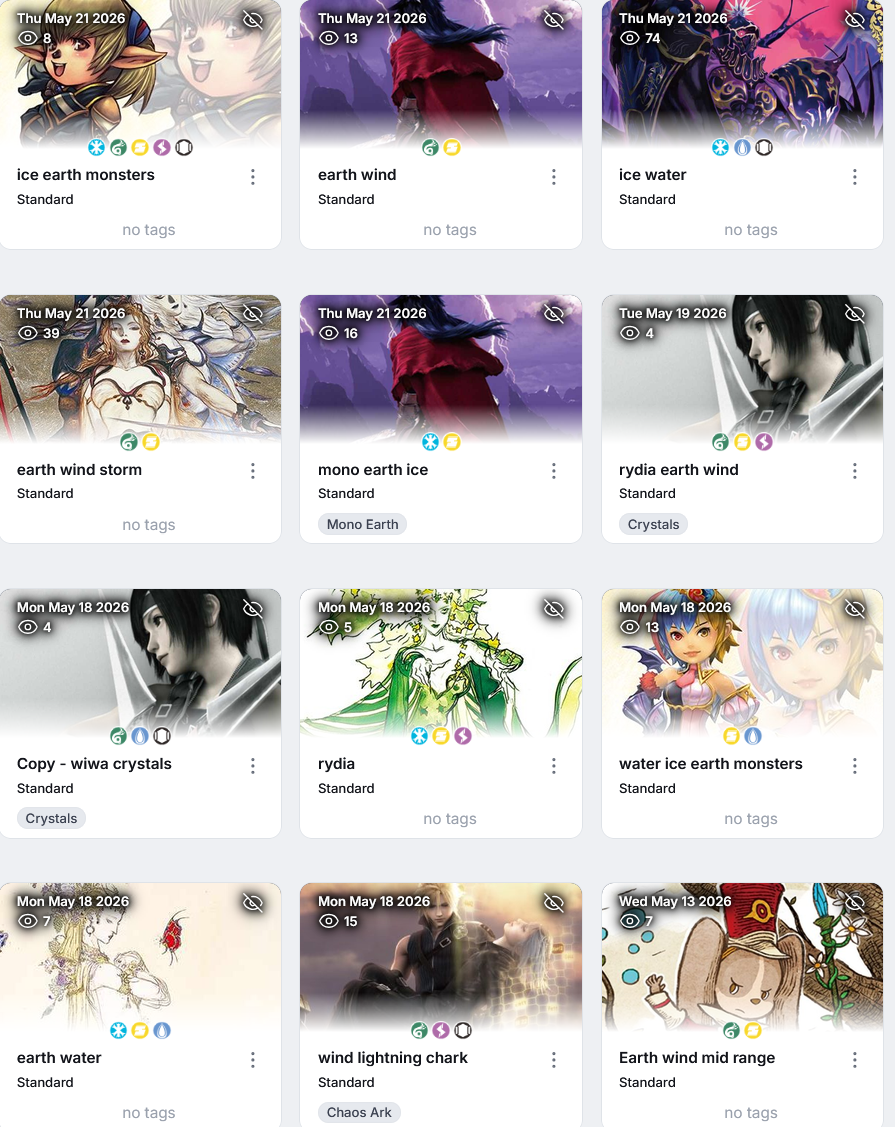
Most of these decks have fewer than 30 cards in them because I gave up on them, lol.
Let’s use Opus 29 as an example of my deck-building process.
I started with Snow after reading MrCool’s article on the set, and I built the initial list around him. Snow is a value engine that Ice/Earth never had before. Meanwhile, multiple other decks had a five-cost Forward that generated value on Turn 2. I thought Snow could fill that role and help Ice/Earth become more proactive, rather than relying on Kefka to get us there while we played reactively.
Another reason to try Snow was Serah. She’s an insane card to pair with him because she protects him from abilities, even through Cuchulainn and Malboro/Witch. That’s because Serah herself is the card protecting Snow from abilities.
The powerful play, and the ideal line, is Turn 1 Amodar into a Turn 2 Snow, followed by a free-played Serah. Then, on Turn 3, you can play Rydia and search for Hecatoncheir (3). Attack with Snow, then cast Hecatoncheir for 1 CP.
The tempo of this line felt strong enough to warrant further exploration. You get to develop your board while keeping a value generator in play. I ended up looking more closely at this deck for the first Materia Cup of the year.
We could also play Maat LB to give our board +1000 power, then cast a discounted five-CP Hecatoncheir to save our Snow board while wiping our opponent’s board.
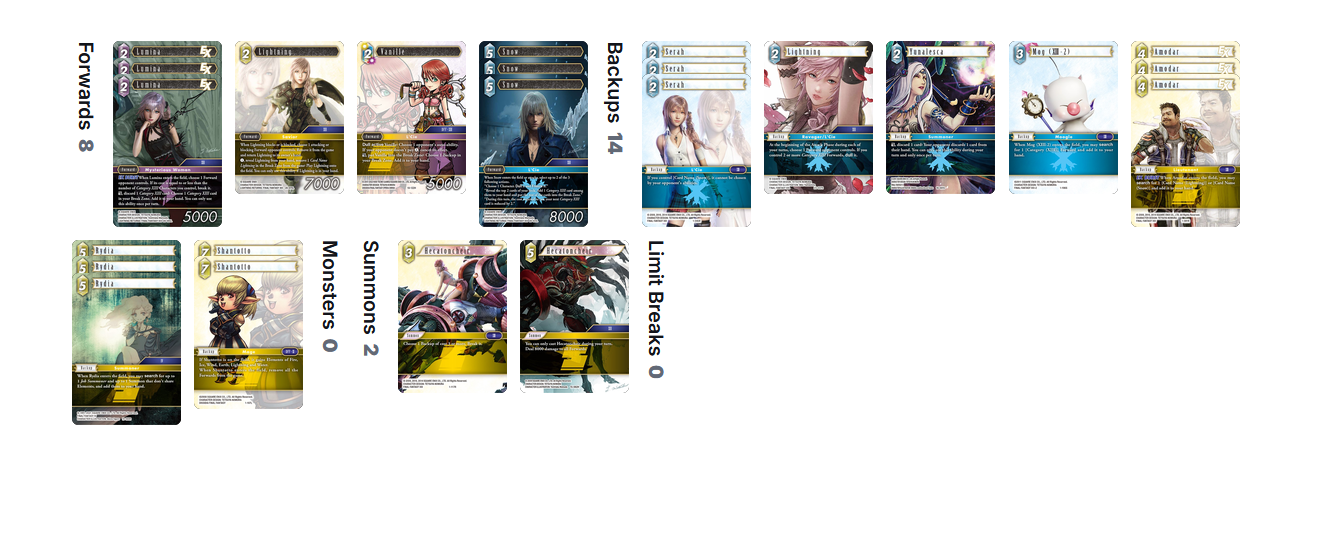
The initial idea
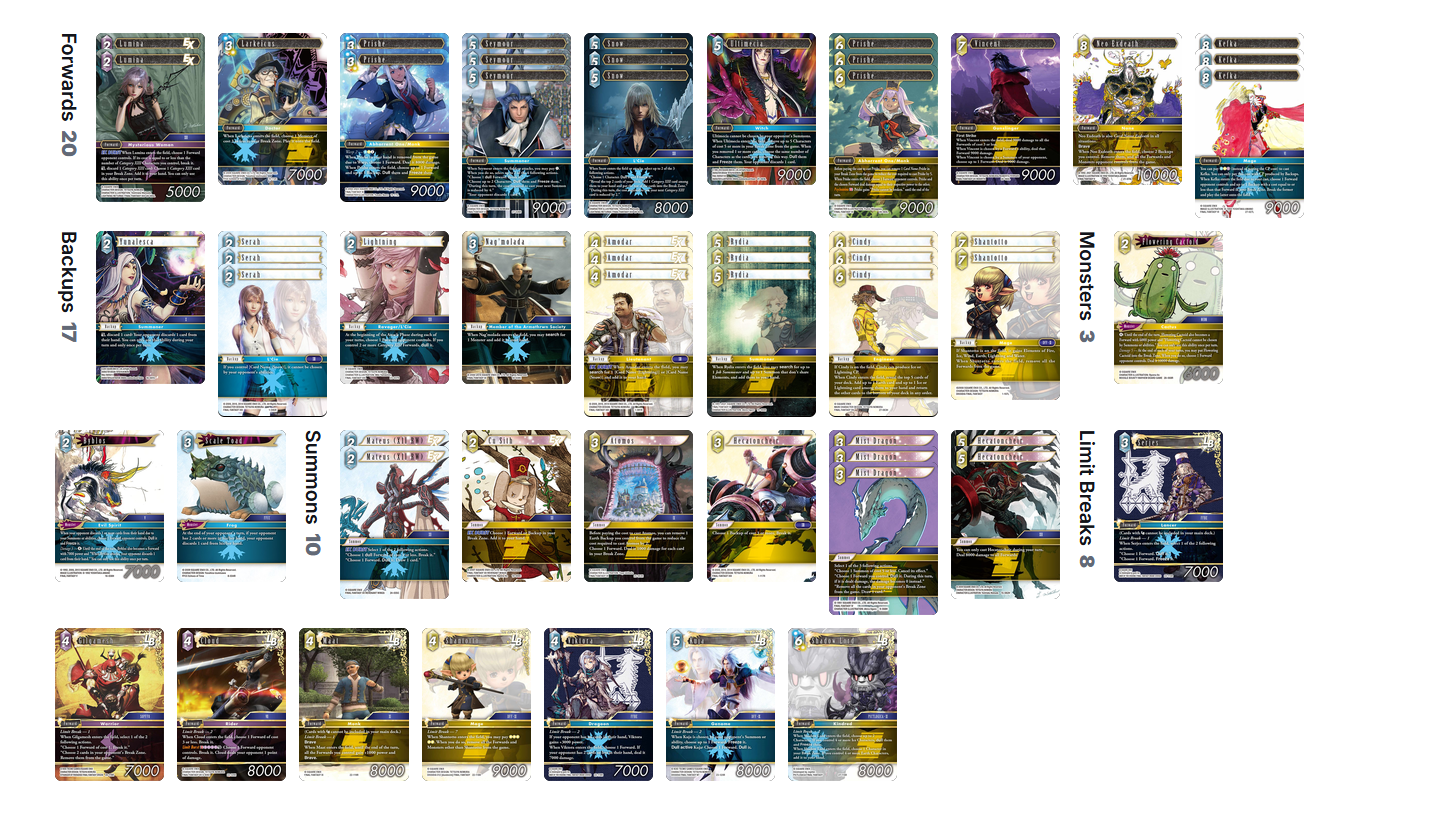
The final product.
Consistency and Power
How do we go from an idea to a fully fleshed-out deck?
Once I figure out something powerful to do, the thing I like to focus on the most is consistency. It’s pointless to have a powerful strategy, if you can only execute it 50% of the time. While I’m not as mathematical about it, like KP crunching the WOL 7 numbers, I’m still a big advocate of consistency.
For my slower decks, I tend to play around 16 Backups, plus two Shantottos, alongside multiple searchers. Amodar, Rydia are examples of searchers and even Cindy counts as searcher in my eyes because she starts the chain of getting Backup into Backup.
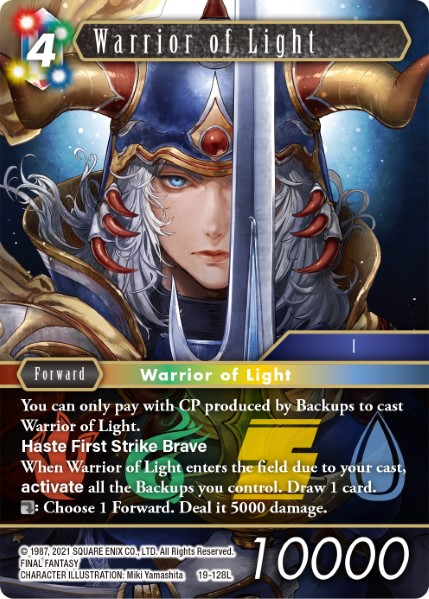
I added Seymour and Ultimecia as backup plans in case I don’t draw Snow early. Decks can’t afford to be purely reactive. If my opponent develops their Backups uncontested, they’ll probably be more efficient than I am with cards like Wol4 or 6 CP Fire Jecht.
I also added Kefka to generate value with Cindy and give myself a strong answer to cards like Taivas and Prishe.
Two things are especially important to me right now: having a mix of reactive and proactive plays, and having a backup plan. What if I can’t Snow turn 2? In other decks they have other cards that fulfill the same role. Two-CP Zidane (29-008L) fills both roles in Mono Fire. Water decks can play LB Leo, Lunafreya, and so on. It’s more important to have a powerful deck and well constructed deck if your deck can’t “draw” out of problems to maximize your chances of winning.
Consistency vs Power?
When we deck build, we usually have to make concessions in the deck in the form of having a high power deck or a consistent deck. This can come in the form of playing a mediocre card in order to make certain synergies exist in the deck. A good example of this is these two cards.
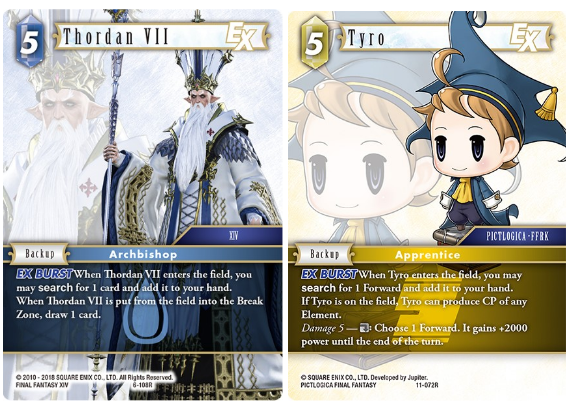
Both Thordan and Tyro are very below-rate cards compared to other searchers. There are a bunch of other cards that do similar things like search for a card that cost 3 CP. You would never want to play Tyro or Thordan turn 1, but there have been tons of top performing decks playing one or even sometimes both of these cards. The difference between Thordan or Tyro and the other 3CP searchers is that it is so powerful to search the right card at the right time that it’s worth the risk of playing them on turn 1. Tutoring the best forward or card in your deck is necessary for decks such as Refia or Chaos/Ark. The downsides of being overcosted are further diminished by the EX on the top right corner and the synergy with Lunafreya. Not having to cast the card, and still getting the effect. What a dream!
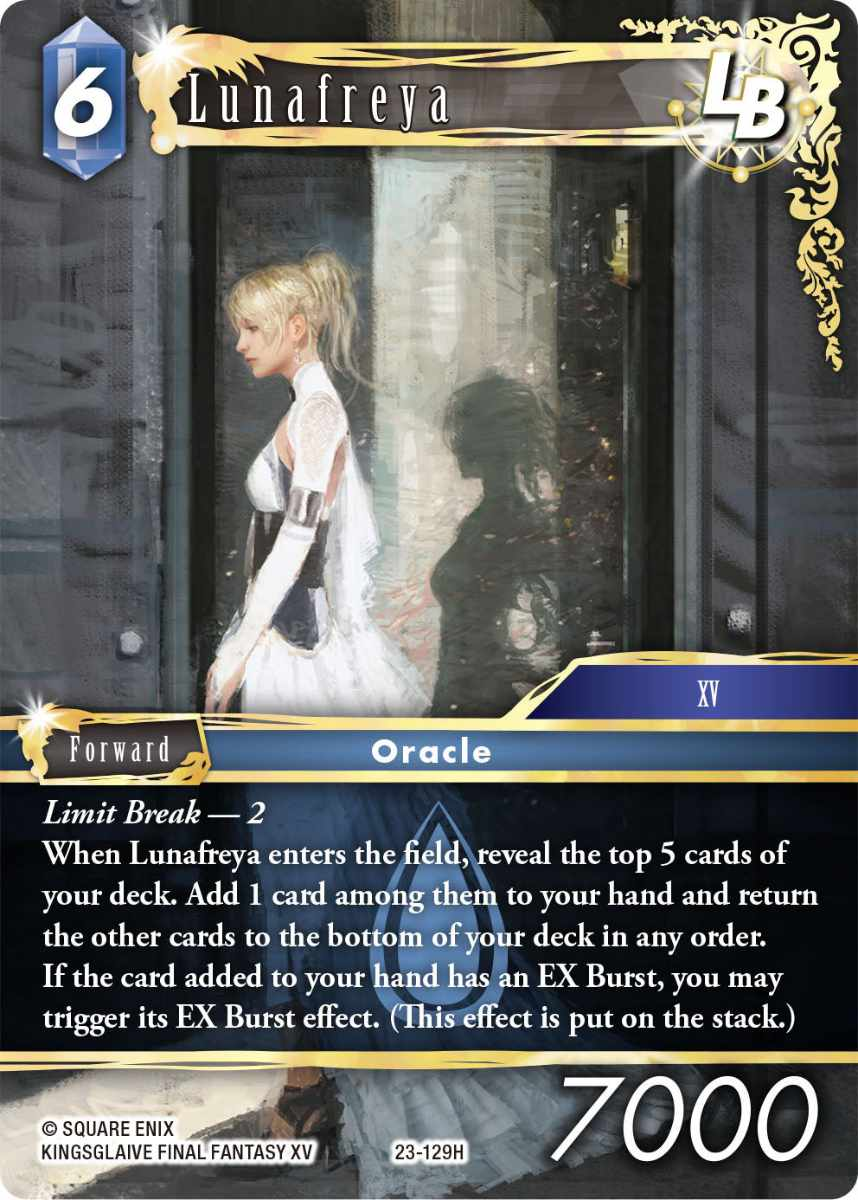
The best decks run a fine line between power and consistency. It’s not wrong to lean either direction but it is important to think about both of these concepts. Sometimes you can even run such a strong deck that both are achieved, and usually these decks perform very well at events.
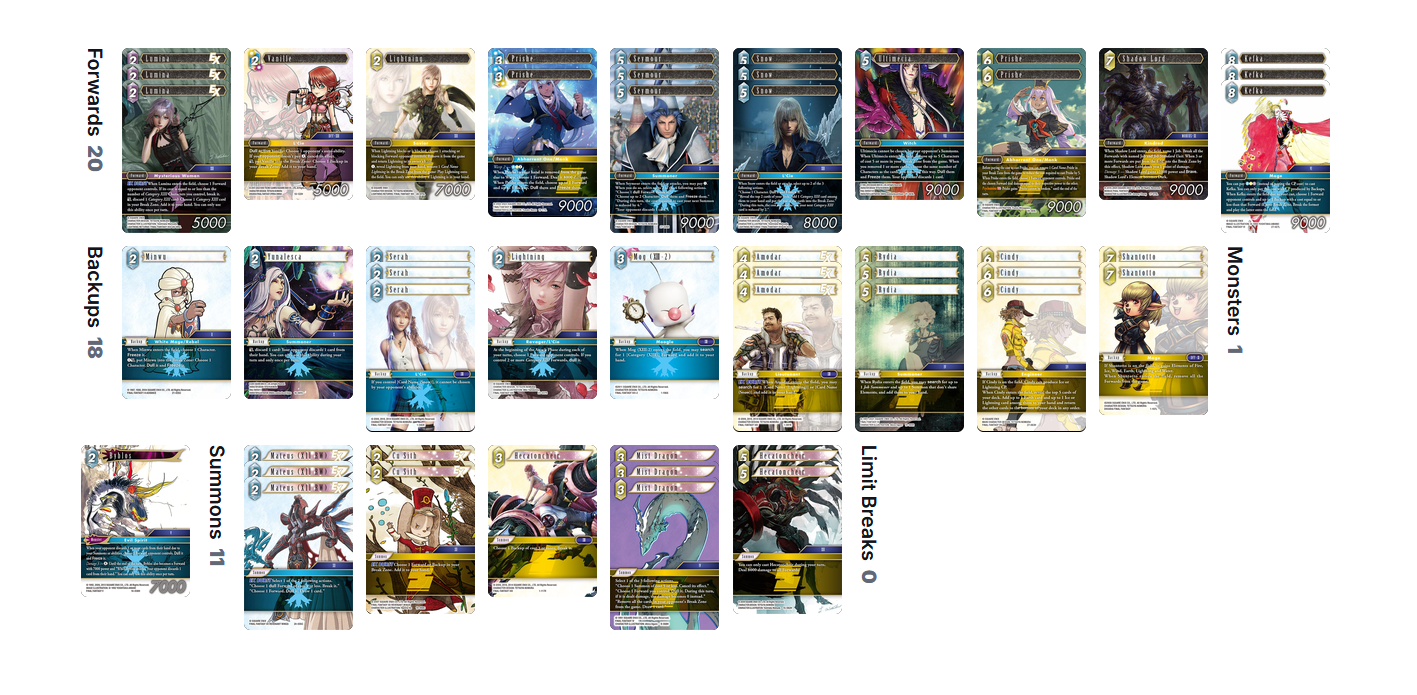
Closer to the final draft
Identifying the Problems
Here’s what I noticed after playing a few games.
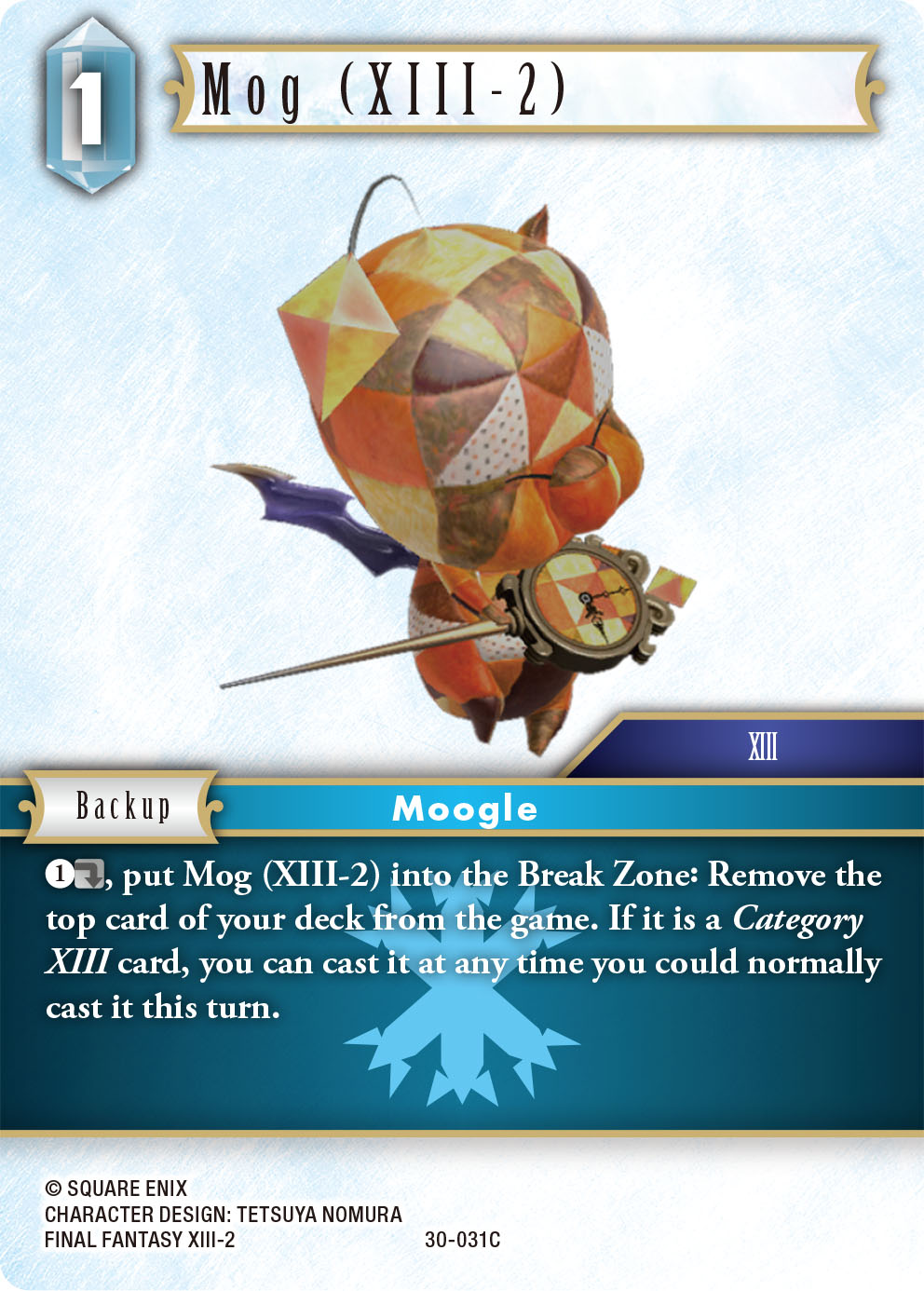
I would end up with too many Ice Backups because of all the one-ofs. It wasn’t easy to cast Lumina consistently without Shantotto or Cindy. Even if I could search for Vanille with Mog (XIII), playing Vanille for free wasn’t necessarily good, depending on what my opponent was doing.
For example, WOL 7 players would be happy to pay the two CP in order to resolve WOLl 7. If I played Vanille for free, I wouldn’t be able to answer what they were doing with Shantotto because I had effectively “spent 2 CP” playing Vanille. The card itself counts as CP, after all.
For Lumina to be worth including, the break-even point had to be three Category XIII characters on the board. Otherwise, the deck-building constraints weren’t worth it.
All these points led me to remove the “fluff” from the deck and focus on beating what I expected the metagame to look like.
Mog (XIII) was an extra Category XIII Backup that taxed the Backup lineup by taking up another Ice Backup slot. What I definitely wanted to keep was a Backup lineup that made Kefka playable.
Then I removed Lightning and Vanille because they were there to provide color diversity for Mog (XIII) to search for, rather than because they were better cards than the alternatives.
Learning From Other Lists
I also generally try to look at other tournaments for inspiration and see what other players are doing.
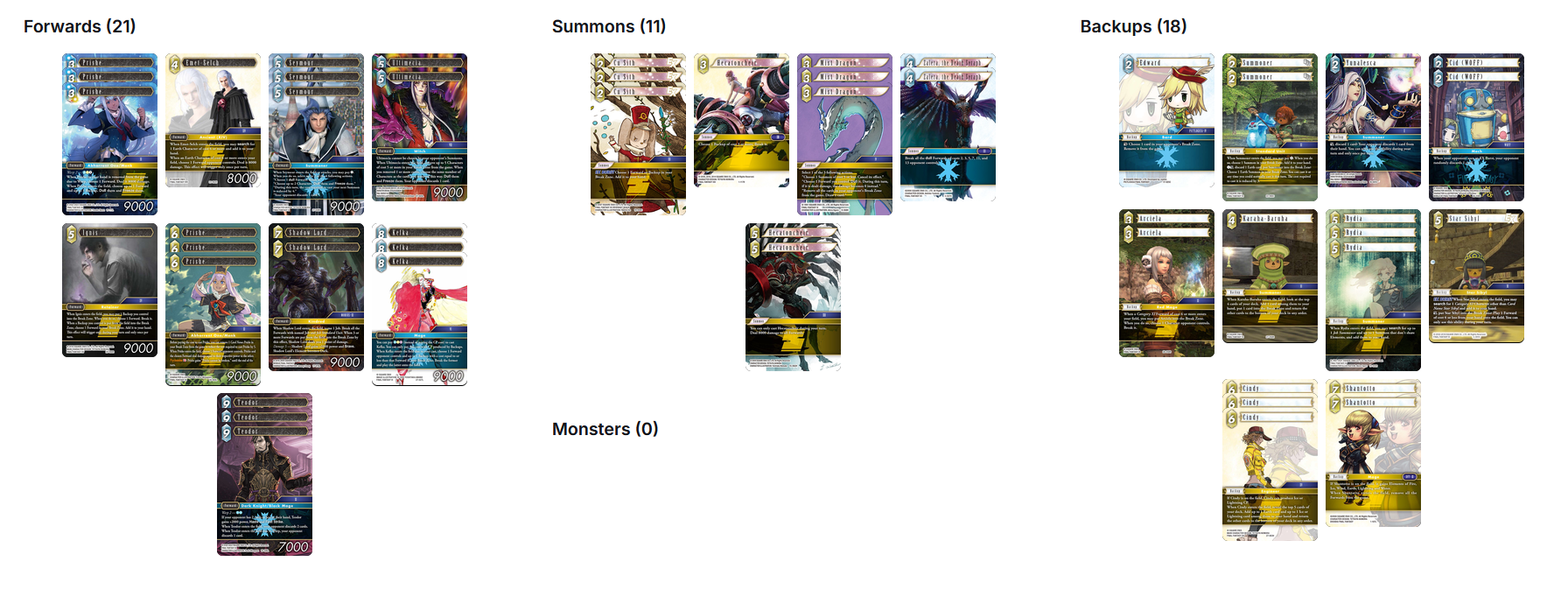
Looking at the Beijing Cup, I saw another Ice/Earth player who focused more on Category XI synergies and individually powerful cards. Don’t let others tell you that netdecking is a negative thing. It’s a good way to get ideas, and not everyone has to be a great deck builder to enjoy the game and do their best in a competition.
Looking at the Chinese list, I took Prishe, increased the count to three, and tried Arciela.
How to Choose Tech Cards: Keep Them Generic
By this point, I had my initial concept, but some parts of the deck weren’t quite up to the task. This is where I start testing tech cards against the matchups I expect to face.
At the time of the North Carolina event, we were looking at the Japanese metagame. I was expecting Gullwings, Mono Earth, and WOL 7. I was also testing against my friends, who were playing a lot of Mono Fire.
Ice/Earth was struggling against Mono Earth, WOL 7, and Mono Fire. I was getting out-grinded.
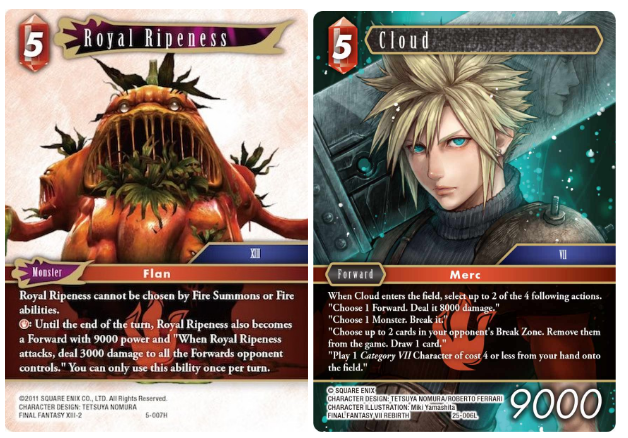
When I tech cards into a deck, I generally like to keep them generic enough to be useful in most matchups. I don’t expect to play the same matchup every round. That’s why I would never play something like Royal Ripeness specifically for a Mono Fire mirror, but I might play something like Cloud, which is great in the mirror.
Cloud can remove cards from the game to prevent Mont’s effect, has a massive 9,000 power that makes him difficult to remove, and costs only 3 CP.
Testing Tech Cards
In the case of Ice/Earth, I was looking for grindy cards that would help against Mono Earth and Mono Fire.
When I test cards, I like to start with three copies of anything I’m trying to determine belongs in the deck. If I put in three copies, I’m more likely to see them during my games and get a better idea of how they perform.
I also like to keep track mentally of cards that might be helpful in tricky board states. Arciela was good, but I eventually cut her because she didn’t fit the Category XIII package, and I wanted to lock in some tech against Earth and Fire.
This led me to try the Monster package as a source of grindy value.
Most of the Earth decks coming out of Japan had cut their Monster removal, aside from LB Shantotto and Neo Exdeath. That meant Scale Toad and Byblos could potentially dull and freeze a big board. This ended up paying off when I had to play Chris Lopez in top 16 who was on Mono Earth, as he had to cast Shant LB to clear Byblos and Scale toad. When he had to get off LB Tidus plan, I was able to grind him out and mill him in a long game 3.
Adding a Monster package also gave me another backup to recur with Kefka, who could then bring back Nag’madola.
When adding searchers to two-color decks, I always like to find ones that can search for cards in both colors. So, I started looking at Earth Monsters.
The new Cactuar card fit the bill. It offered removal at Damage 5, let me poke at Fire decks when they had no Forwards on the board, and was an Earth card.
To finish things off, I included one Larkeicus for color coverage and incidental recursion. This meant I could pitch a Monster early and potentially get it back later.
Power Matters
As I approach an event, I find it important to come up with an important stat line to gear my removal to. Let’s pretend hypothetically Lightning Water Monsters is going to be the most played deck, and considered the most powerful deck.
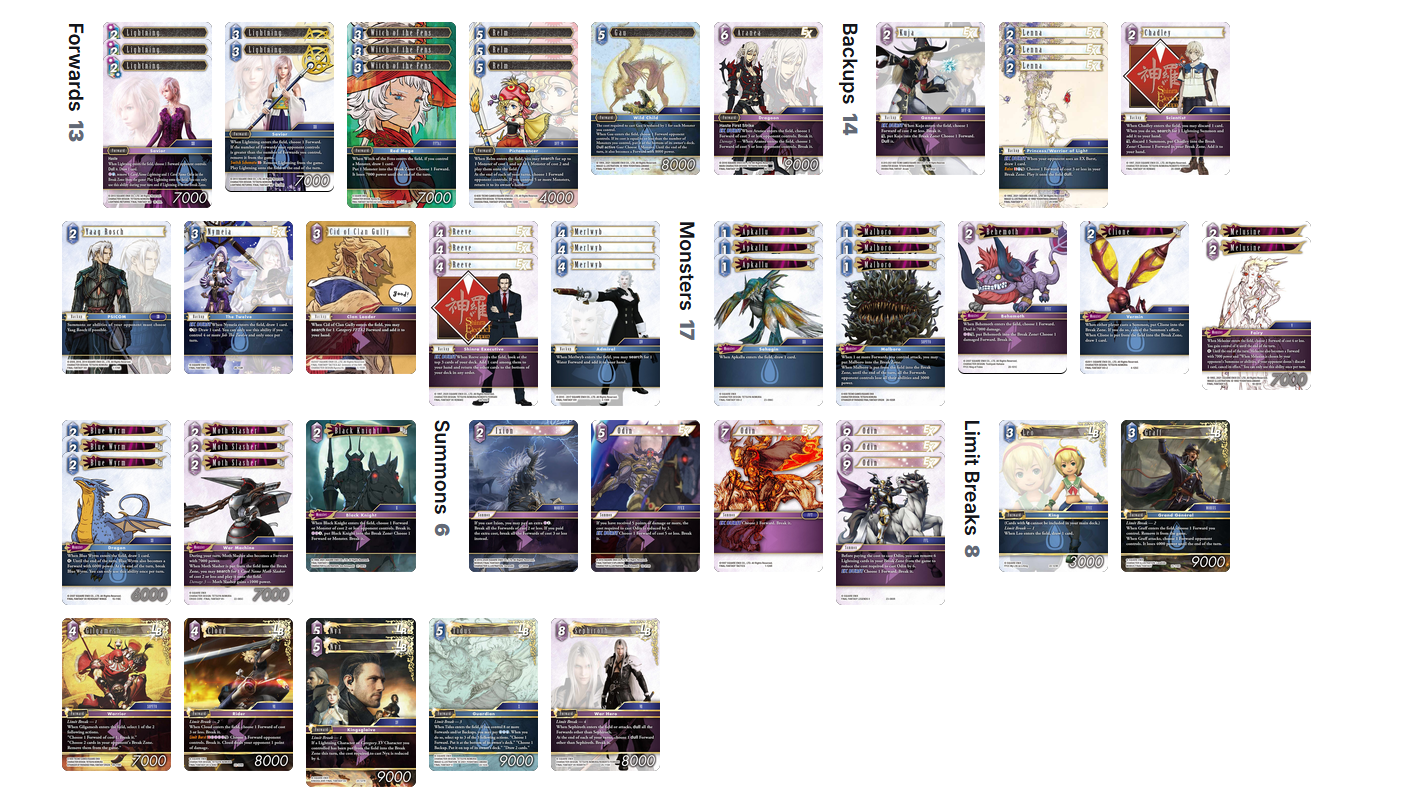
Looking at this deck I would see that most of the cards are 3CP and lower, as well as 7k. This means that I want to as efficiently answer these cards as possible. For Mono Fire or Warriors, you might consider the following two cards in your deck normally.
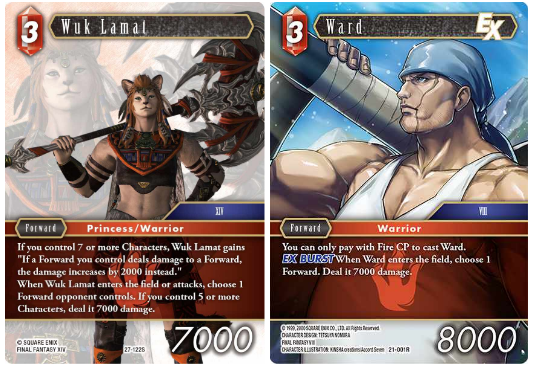
Conventionally the ceiling for Wuk Lamat is higher. It can deal 9000 damage to a forward, and repeats the effect on attack. However in this hypothetical case of the Water Lightning matchup, Ward could be considered better. We want to hit the 7000 bar to remove most of the forwards in this Water Lightning deck. Ward is 8000 power, which means he survives a Witch targeted effect of minus 7000 power. Wuk might not be able to attack since Water Lightning will find it easy to remove on their turn, making the second half of her ability less important. It’s important to find out what stat line is important in the meta, and then adjust to it. Another example of this would be the current meta of Opus 29. I would say MBM has been pushed out by this guy.
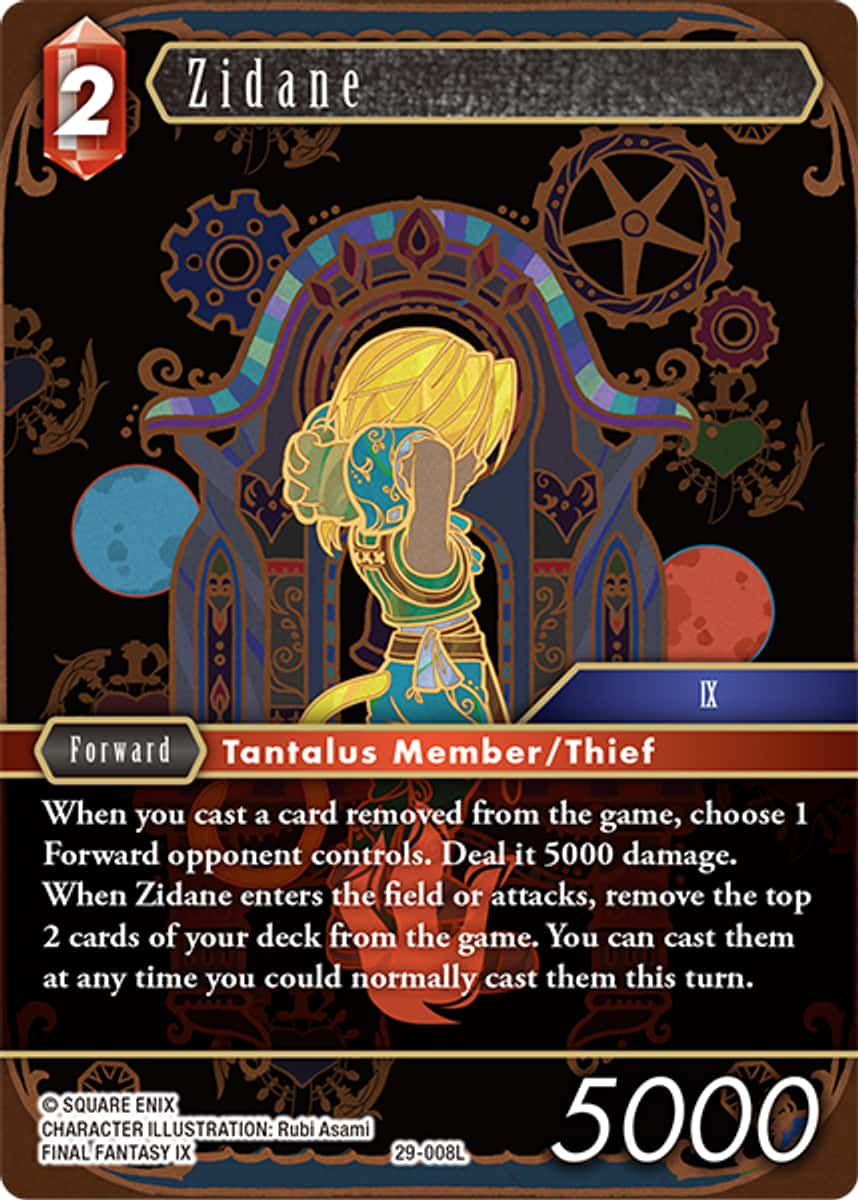
Zidane’s value in removing any 5000 power or less forwards like Fran and Penelo really help keep decks that over emphasize on these small forwards out of the meta. There’s a difference when people talk about cards that die to commonly played removal, vs cards your opponent actively wants to play to advance their own gameplan and incidentally deals with your forwards efficiently. Remember this guy gatekeeping most forwards of 5k or less outside of Lasswell?
The Final Tech Slot
As I got closer to the event, I was playtesting against MBM and Kadaj a lot.
This was before Wind/Ice was fully optimized and the full Ice/Wind Crystal shell had been developed. One common factor, though, was that I was losing to Kadaj and Balthier.
These 9000 power forwards essentially demanded to be answered during my opponent’s turn.
As I thought about which card I could slot in to help me survive those situations, inspiration struck: I added one Atomos.
Atomos could break either of these Forwards on my opponent’s turn, but it also synergized with Kefka because I could sacrifice one of my Earth Backups to replay it later with Kefka’s enter the field ability. I also swapped from Shadow Lord which was targeting Gullwings to Vincent for Wol7, because 2 Hecatoncheir 5 and Shantotto was doing well enough for the Gullwings matchup. Vincent added another board wipe against Wol7, which Shadow Lord did not even though they were both 7CP “board wipes.”
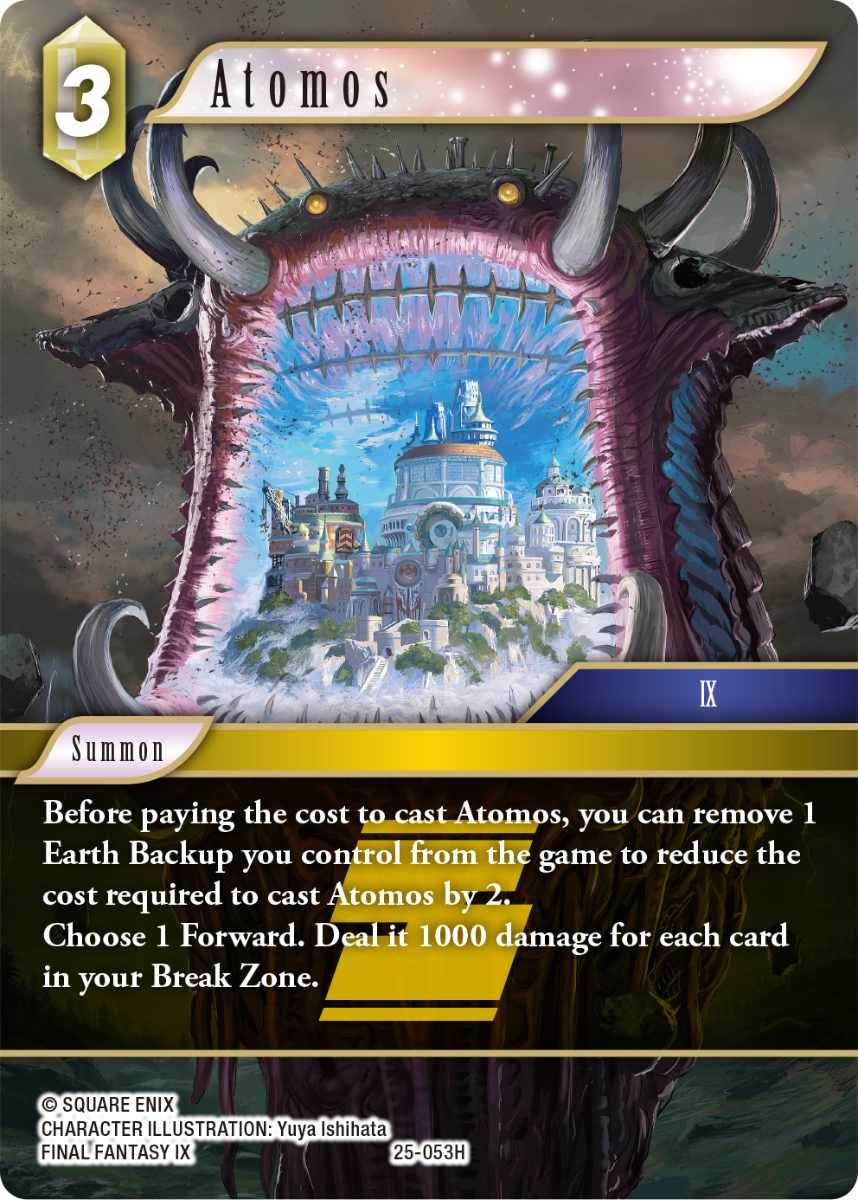
Both worked and had cool full art.
Discussing the Deck With Friends
As I get closer and closer to my final list, I like to start talking to my friends and teammates about specific cards and hearing what they think. Even though sometimes we are competitors in the same event, I’ve always had better success talking and discussing with my friends the deck I’m planning on bringing to the event. It’s never worth the “advantage” of hiding your tech if you don’t talk to anybody at it, because people will bring up something that you’ve missed.
In general, I recommend talking to other people about your deck. You don’t have to take their advice, but it’s good to keep their opinions in mind and understand why they think a specific card is good. The Maat to pump my forwards plus Snow discount Hecatoncheir 5 line actually was taught to me by Eureka. Funnily enough I had wanted to cut Maat from my LB deck for something because he wasn’t doing anything for me. Turns out I missed a cool line.
Try to keep an open mind.
SPOILER ALERT
Thanks for reading. Enjoy this spoiler which has an interesting job, cost , category. Maybe some cool moogle deck will come in the future??